


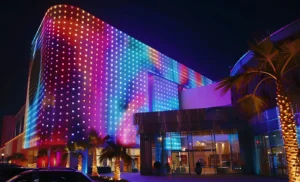


If there is one paradigm that has guided retail design over the last decade, it has been the omnipresence of digital: LED wall panels, interactive totems, rotating screens, and promotional videos everywhere. The equation seemed simple: more pixels, more innovation. Today, however, this formula is beginning to crack. And what is calling it into question is the most connected generation ever: Gen Z.
Having grown up among smartphones, algorithmic feeds, and constant notifications, Gen Z does not necessarily look to the physical store for an extension of the digital world they experience every day. On the contrary, they seem to place increasing value on what digital cannot offer: matter, tactility, authenticity, presence. In a retail space saturated with LEDs, animations, and looped content, what was once perceived as innovation risks turning into visual pollution, increasing sensory overload rather than enriching the experience.
This is where a new direction in retail design emerges: more space for the physical dimension. Surfaces to touch, textures to discover, authentic materials, natural light, and environments capable of restoring a sense of calm. The most attentive brands are beginning to reduce the presence of bright displays to enhance precisely what digital cannot replicate. The physical store, therefore, no longer has to compete with the smartphone. It must offer what the smartphone cannot give: a space for decompression, experience, and real presence.

Even on a strategic level, screens are not always the most effective solution. The problem is not the technology itself, but the way it is used: when the screen becomes the center of the experience without adding real value, some critical issues emerge that go beyond simple aesthetics.
The time and place factor.
Rotating video content only works if the customer is in the right place at the right time to catch the message. Just a few seconds’ difference is enough for the opportunity to vanish. For a generation accustomed to on-demand content, consumed according to their own timing and interests, video loops inside stores can appear rigid, predictable and even intrusive.
False interactivity.
In most cases, a display does not create a true experience: it simply broadcasts advertising content passively. And when something freezes or stops working, staff have to step in, taking time away from daily activities. What on paper should be innovation risks turning into a new source of operational complexity.

The answer is a renewed focus on solutions capable of communicating calm, authenticity and quality. Among these, SEG systems (Silicone Edge Graphics) and high-definition fabric lightboxes stand out: clean, perfectly taut surfaces free of visible frames. A visual communication that does not flash, does not distractand leaves the customer free to observe and interpret the message at their own pace.
Three advantages emerge clearly.
• More visual comfort: less glare and no blinding effect.
• More freedom: static content can be enjoyed according to the customer’s timing and attention.
• More authenticity: the texture of the fabric and the use of warm materials help create environments that
are more welcoming, tactile, and less artificial.
Matter returns to being the protagonist. Less technology, more sensory experience.
Choosing simple materials instead of screens is not just an aesthetic choice: it means simplifying the point of sale, reducing infrastructure, costs, and consumption, and favoring more durable, efficient and sustainable solutions.
The retail of the future, therefore, will not necessarily be the one with the most technology. It will be the one capable of understanding when technology is needed and when, instead, it is time to turn it off. Because, perhaps, true innovation is not adding another screen. It is knowing when to turn it off.
SOURCES
• https://thelookcompany.com/blog/2026-retail-design-trends/
• https://conzoom-solutions.messefrankfurt.com/frankfurt/en/experts/hyper-physical-retail-future-of-retail.html